What is a Lightfold cassette?
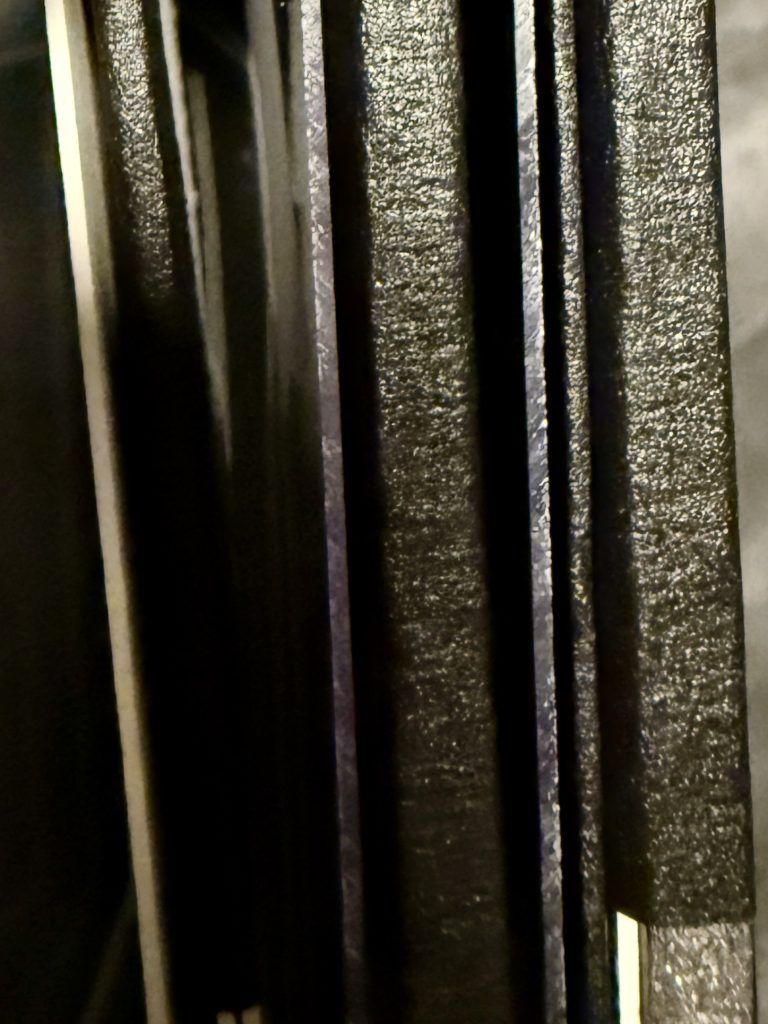
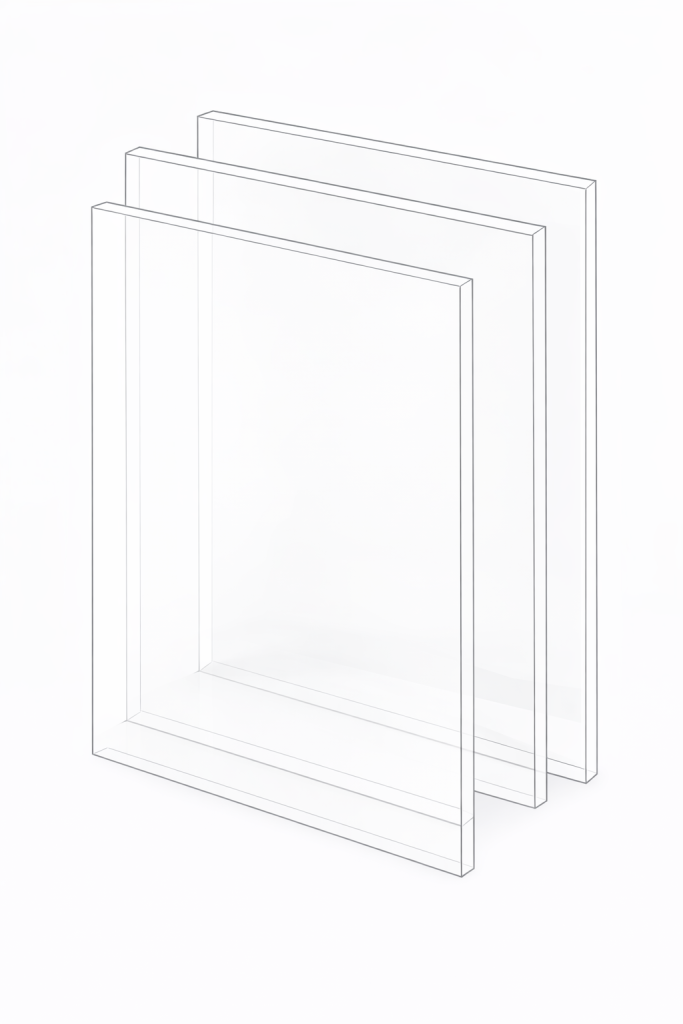
A Lightfold cassette is a framed, layered assembly made from one standard photographic print plus one or two semi-transparent images printed on clear plastic sheets. The layers are stacked in a fixed order, separated with spacers to create consistent gaps, then secured and precisely aligned inside a rigid frame behind a clear front pane (standard glazing or an optional premium glass).
SCROLL DOWN TO LEARN MORE
What is the difference between a 2-layer Lightfold cassette (two image layers) and a 3-layer Lightfold cassette (two image layers plus a separate text overlay layer)?
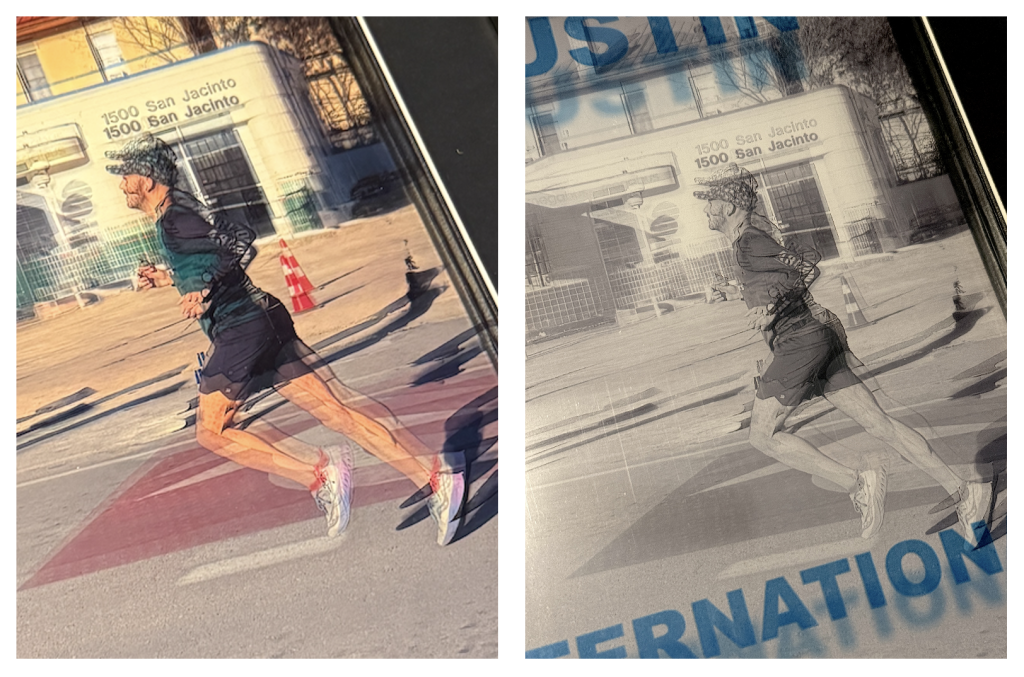
A 2-layer cassette (below, left) uses two image layers: a base photographic print plus one semi-transparent plastic image layer. It is purely image-based, so the focus is on depth, composition, and motion within the scene.
A 3-layer cassette (below, right) adds a third layer: the same two image layers plus a separate semi-transparent text overlay layer (printed on plastic). The text is physically separated from the image stack, so it can “float” above the photo and remain crisp while the underlying imagery shifts. This option is best when you want a title, date, location, lyric, or short dedication integrated into the piece without permanently altering the photograph itself.
What are the image requirements for an effective Lightfold cassette?
For the best Lightfold cassette, choose a sharp, high-resolution photo with a clear subject, ideally set against a lighter, simpler background so the focal feature stands out once layered. Images where the subject is already in motion often read especially well, but motion is not required because Lightfold’s mathematical layer manipulation can add a sense of movement even to a static scene. Lightfold reviews each photo one-on-one and will discuss fit, cropping, and what to emphasize before production.
How does a Lightfold cassette creative depth?
A Lightfold cassette creates depth by stacking a standard photo behind one or two semi-transparent plastic layers inside a frame, with small, fixed spacers between each layer. As you view the piece from different angles, the separated layers appear at different distances, so the image reads as having dimensional space instead of a single flat plane.
How does a Lightfold cassette creative a sense of motion?
A Lightfold cassette creates a sense of motion by layering one or two partially transparent plastic prints over a base photograph inside the frame. Those transparent layers are mathematically manipulated so that, when they align over the photo, they introduce controlled shifts and distortions. As you change viewing angle, the separated layers slide relative to each other and the base image, which accentuates the effect and makes the scene appear to move.
What goes into the production of a Lightfold cassette?
Producing a Lightfold parallax cassette involves both design prep and precision assembly. After selecting the source image and the feature to emphasize, Lightfold prepares the base photo, generates one or two semi-transparent overlay layers, applies mathematical manipulations to enhance the motion effect, then prints and trims each layer. The cassette is assembled by setting spacer thickness, stacking and aligning layers to tight tolerances, cleaning internal surfaces, and sealing the stack in a frame behind the chosen glazing.
Production is not always cookie-cutter. Some images require experimentation, such as adjusting overlay density, tuning the transformations, or changing spacing, to achieve the intended depth and motion.